
A B2B target audience is the set of companies, and the people inside them, whose characteristics and needs make them the most likely buyers of a given product or service. It is the first choice in the whole process of B2B lead generation — it decides who the campaigns attract and whether the budget concentrates or scatters. This guide covers the criteria that describe a B2B audience, how to define your target step by step, how to segment it, what AI changes in audience targeting, and what B2B target audiences look like in practice.
What is a B2B target audience?
It is a defined slice of the target market: organisations with shared characteristics, needs and buying behaviour, for which the offer is a real solution to a real problem. The distinction from the target market matters — the market is every theoretical buyer of a category, while the target audience is the selected subset a marketing team concentrates on here and now.
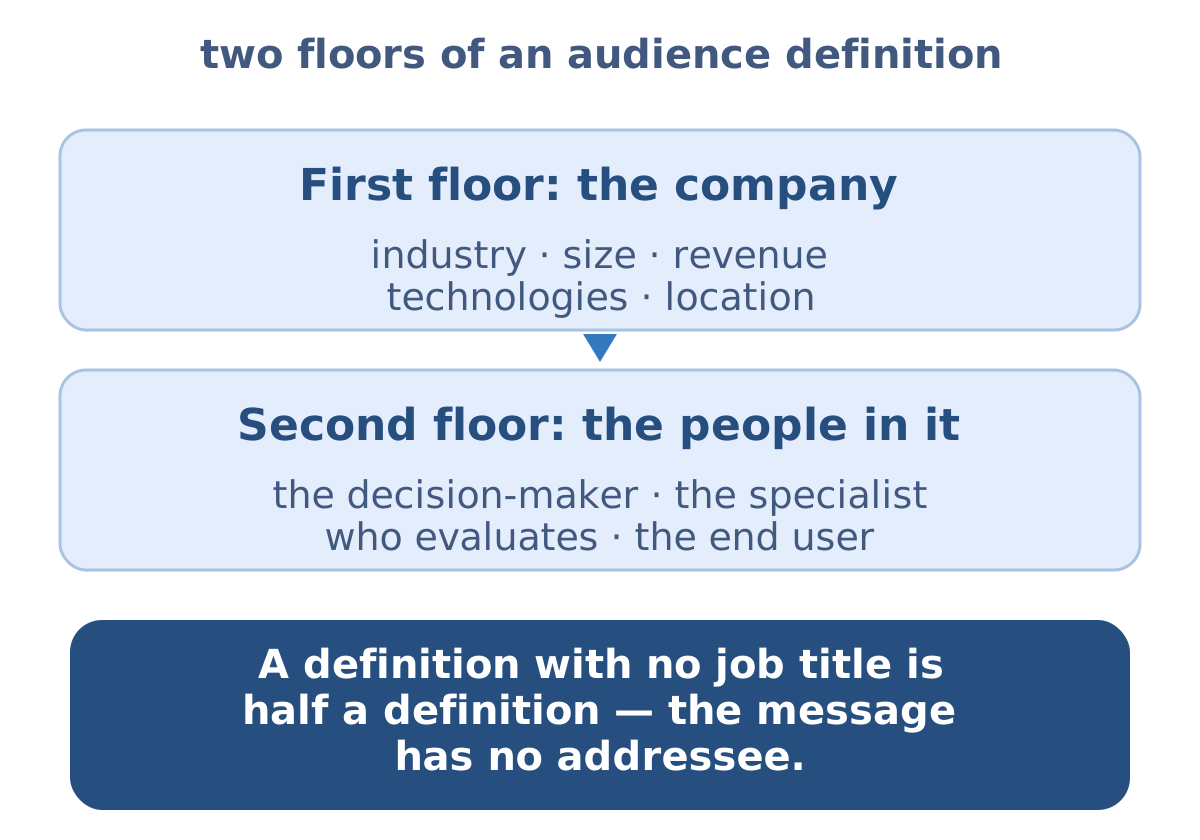
B2B audience targeting has two floors, and that is what separates it from B2C. The first floor is the company: industry, size, revenue, technologies in use, geographic location. The second floor is the people inside it — the decision-maker who approves the budget, the specialist who evaluates the product or service, the end user who will live with it. A definition that names an industry and a company size but no job title is half a definition, because the message still has no addressee.
Defining a specific audience precisely produces three effects. The message can be written to someone rather than to everyone. Marketing spend stops paying to reach people who were never likely to buy. And the offer adjusts to needs that show up in customer data instead of needs the marketing team imagined.
What criteria describe a B2B target audience?
Five types of criteria, four of which B2B shares with B2C and one it owns:
Firmographic
industry, headcount, revenue, ownership, technology stack. The B2B foundation, because an organisation buys before any individual does.
Demographic
in a B2B reading this means job title, seniority and role in the buying process, not age and gender. A director and a specialist at the same company are two different audience segments.
Geographic location
country, region, language, time zone. Decisive for local services, logistics and international sales.
Psychographic
attitude to risk, appetite for change, buying culture. This is what explains why two companies with identical firmographics behave nothing alike.
Behavioural
how they look for information, what they download, how often they come back, which pages they read before a purchase decision. The closest layer to the decision, and the one most likely to be sitting unused in your own analytics.
A working definition contains characteristics, a need and a buying context. A demographic line on its own (“operations directors, manufacturing”) is a filter, not yet an audience.
How do you define your target audience step by step?
Five steps, in this order:
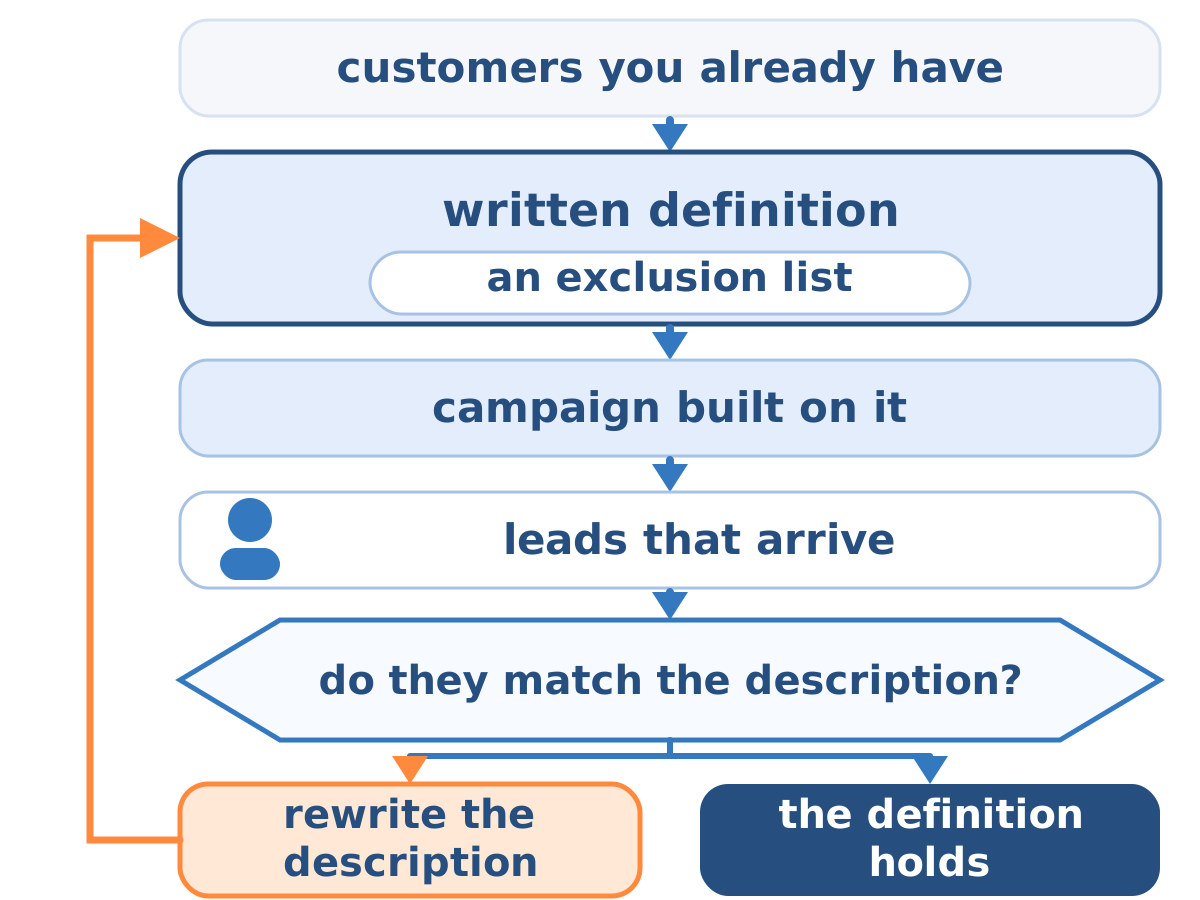
Start with the customers you already have
The CRM and site analytics show who buys, who stays and who refers. The best current customers are the pattern for the audience you are looking for, and this is the cheapest customer data in the building.
Narrow the market in three moves
From the whole market (TAM — everyone who could theoretically buy), through the part your company can actually serve (SAM), to the realistically reachable slice (SOM). That last circle is the target audience of a campaign.
Describe the audience with criteria and split it into segments
Where the group contains subsets with different needs, each one gets its own message — the section below covers how far to take that split.
Build a persona for the representative
The audience says who to reach; the persona says how to talk to them — a specific person in the buying process, with their goals and objections. Detail: B2B Buyer Persona.
Define the anti-audience and validate with a campaign
Deciding who to exclude — students, competitors doing research, companies beyond your service range — belongs in exclusion lists inside the ad platforms. Then the first campaign tests the definition: when the leads fail to match the description, the description gets corrected.
B2B audience segmentation: how to split an audience into segments
Segmentation divides the target audience and the contact base into smaller audience segments with shared characteristics, so that each one receives a message written to it. The target audience says who the company sells to; the segments say how many different ways it has to tell that story. The sales team gets a work order out of it: the highest-potential groups first.
Four criteria are enough to start. Firmographic ones come first, because the organisation buys — a manufacturing plant and a law firm need different content even when the form was filled in by people with the same job title. Behavioural ones sit closest to purchase intent: a lead reading a pricing page is somewhere different from a lead reading a how-to guide. Demographic ones in the B2B sense mean role in the buying process. Geographic ones matter for international sales. Intent data — signals that a company is actively looking for a solution — is the strongest single signal available and the one that requires tooling to collect.
The split itself takes five moves. Set the goal, because segmentation for sales priorities looks different from segmentation for newsletter personalisation. Gather the data in one place: forms, CRM, analytics, email history. Choose one or two criteria to divide by, since more at once produces a matrix nobody can service. Describe each segment with a short profile of needs and message. Then deploy it and compare conversion segment against segment, so the split gets judged on results rather than on tidiness.
The second dimension is lead status. Beside who the lead is, it matters where they sit on the way to a purchase decision. A practical split has three temperatures: a hot lead (a quote request, a visit to a pricing page) needs contact today; a warm lead gets educational content; a cold lead stays in the base for occasional communication. The fuller picture is the lifecycle: subscriber → lead → MQL → qualified lead → customer. The boundary against qualification is simple — segmentation organises the whole base into groups, while qualification scores one contact and gives it a status.
One test decides whether a segment is real: does it get its own content? In the drySEO laboratory the industry segments have separate pages, because generating leads for real estate, industry or technology companies means different problems, different costs and different channels. The same rule holds inside campaigns: an email carrying a case study from the reader's own industry beats a universal one, and a landing page speaking a segment's language converts better than a page addressed to everybody. A segment with no content of its own is a label in the CRM. How the base is organised further: B2B Target Audience.
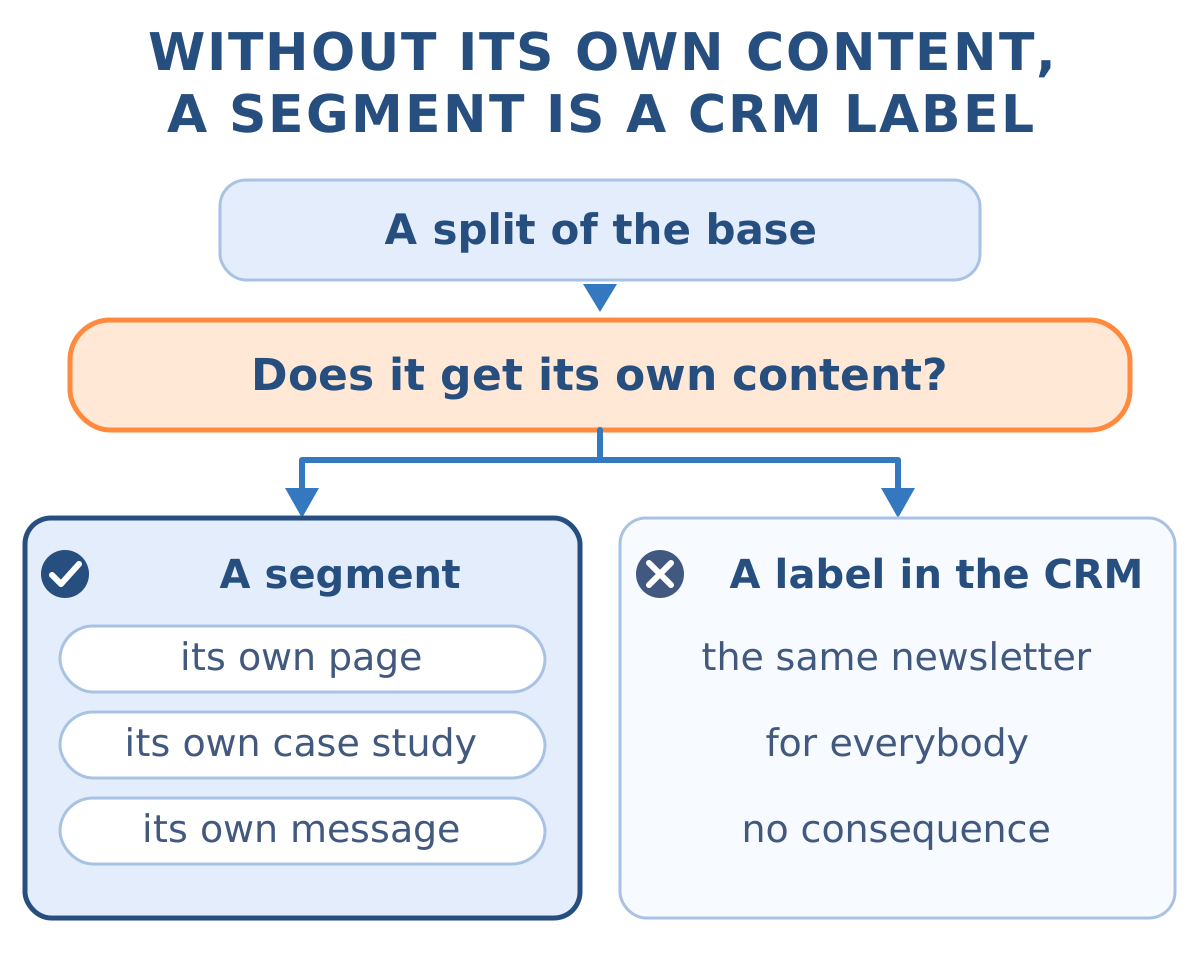
Three to five segments are plenty at the start. Three segments with their own content beat ten that exist only as a dropdown. The failure modes repeat: more segments than the marketing team can write for; segments with no consequence, where everyone still receives the same newsletter; and data going stale, because a B2B contact base ages fast. Where the split uses personal data, GDPR applies — a lawful basis, data minimisation and a clear statement of purpose.
B2B target audience examples
Three examples of what a working definition looks like:
- An industrial sensor manufacturer. Manufacturing plants of 50–500 employees in food processing and automotive; inside the buying process a maintenance manager who initiates and an operations director who holds the budget; they start looking after a breakdown or ahead of an audit. Bought on reliability and service response, compared on total cost over five years.
- A B2B software vendor selling into mid-market finance. Companies of 200–2,000 employees with an in-house IT team; the economic buyer is a CFO, the evaluator a systems owner, the end user an analyst. The trigger is a compliance deadline, and the decisive criterion is how the product or service fits the tools already in place.
- drySEO, as a meta-example of this site. Marketers and B2B company owners who are personally responsible for acquiring customers and who search for specific, applicable knowledge about lead generation in order to implement it themselves. That definition decides which content gets written here.
The common denominator: every definition carries characteristics, a need and a buying context.
How is B2B audience targeting different from B2C?
B2B targets an organisation and then the people inside it; B2C targets a person who decides alone. Four consequences follow, and they change how a campaign is built:
The decision is collective
Several roles read the same offer with different eyes — budget, risk, daily use — so one message rarely satisfies all of them.
The cycle is long
Weeks to months, which means the same potential customer meets the brand many times before any purchase decision.
Volumes are small, values high
With a customer base measured in hundreds rather than millions, algorithmic look-alike targeting has thin material to work with, and firmographic precision does more work than scale.
Both floors need naming
In B2B you segment the company and the person at once; in B2C one level is enough, which is why automated segmentation pays off earlier there.
The ROI consequence is straightforward: in B2B, accuracy beats reach. Reaching the right twenty companies is worth more than reaching twenty thousand of the wrong ones, and that is the whole argument for narrowing an audience.
How is AI used in B2B audience targeting?
In two places, and it helps to keep them apart. On the input side, AI models cluster customer data — finding audience segments in CRM and analytics records that no one thought to look for, and scoring which accounts look most likely to buy. On the output side, AI decides what a buyer sees: an increasing share of B2B research now starts in an AI chat rather than in a search box, which changes where a specific audience first meets a brand.
The second half is what most audience definitions still miss. When a decision-maker asks an AI assistant which suppliers solve their problem, the answer is assembled from sources the assistant trusts — so being present in those sources becomes an audience-targeting question, not only a visibility one. How to measure and influence that layer is covered in our AI SEO guide.
What AI does poorly here is worth stating plainly, because it protects the budget: a model trained on your existing customer base will confidently reproduce the audience you already have, including its blind spots. The correction is human — periodically reviewing the leads that did not buy, which says more about a target audience than any workshop.
What is the rule of 7 in B2B?
The rule of 7 is an old advertising heuristic claiming a buyer needs roughly seven exposures to a message before acting. It comes from consumer advertising, and in B2B it survives only as an order of magnitude: repetition matters, and the exact number is not seven.
Directional, from the drySEO lab's practice rather than from measurement: a new customer typically converts after around the fifth contact, and it can take up to twelve follow-ups (drySEO lab data). The practical consequence is not that you should count exposures, but that at any real scale the follow-up sequence has to be automated — a marketing team delivering five to twelve touches by hand will quietly stop at two. How that sequence is built is covered in the automation guide.
The targeting consequence is sharper still. If it takes five or more contacts to convert, then a loosely defined audience multiplies its own cost five times over: every wasted contact is repeated across the whole sequence. Narrowing the audience does not shrink sales — it cuts the cost of reaching the people who will actually buy.
What are the most common B2B targeting mistakes?
Four, in the order they cost the most money:
Naming companies but not roles
“Manufacturing, 50–500 employees” tells the ad platform where to spend and tells the copywriter nothing.
Defining the audience once
Markets, products and customers move; an audience defined at launch usually describes, three years later, customers who no longer drive the profit. Review it at least annually.
Treating segments as labels
A split with no separate content behind it changes no marketing efforts and no result.
Judging the definition by opinion rather than by leads
The CRM is the source of truth about whether campaign leads match the defined audience, and it is the fastest correction loop available.
The fourth point is where the definition meets measurement: how leads are counted decides whether any of this can be judged at all, and the denominators behind those counts are set out in the metrics guide.
Frequently asked questions about B2B target audiences
How many target audiences can one company have?
As many as it can give separate communication to — usually one to three at the start. Each additional audience means its own content, its own campaigns and often its own offer.
What is the difference between a target audience, an ICP and a buyer persona?
Three levels of detail: the target audience is a set (a slice of the market), the ICP is a company (the organisation profile that buys best), and the buyer persona is a person (a representative with motivations and objections). They work together — the audience sets campaign reach, the ICP filters companies, the persona writes the message.
Can you segment without marketing automation software?
At small scale, yes: a spreadsheet or a few CRM fields handle two or three segments and a few hundred contacts. The limit is dynamics — once contacts are meant to move between segments as their behaviour changes, manual work falls behind.
What data do you need to identify a B2B target audience?
Three sources cover most of it: CRM records of who bought and who stayed, site analytics showing what they read before the purchase decision, and conversations with the sales team about the objections they hear every day. External firmographic and intent data extend the picture rather than replace it.
How do you know the audience definition is working?
Compare the leads arriving against the definition on paper. When a campaign built on the definition brings contacts that match it and they close at a rate you can measure, the definition holds; when they do not, the description gets rewritten before the budget does.