
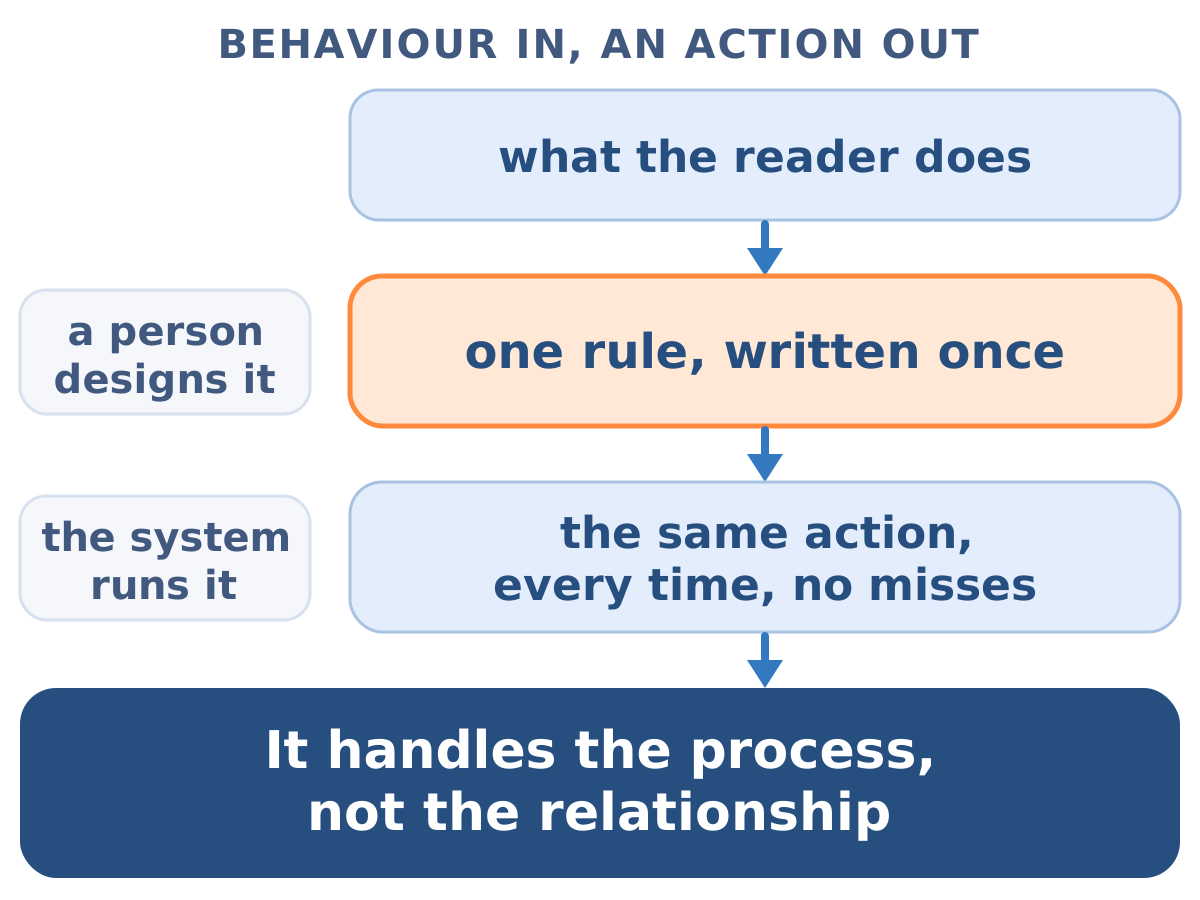
B2B marketing automation is software that carries out repeatable marketing tasks in response to what people do: a signup triggers a welcome sequence, a visit to a commercial page raises a lead score, inactivity moves a contact into a different segment. A human designs the rules; the platform executes them at scale and without gaps. Inside B2B lead generation it guards precisely what a person cannot guard at scale — every follow-up and every change of status. This guide covers the features, how to choose a platform, implementation, personalization, what AI agents change, and which metrics prove the whole thing pays.
What is B2B marketing automation?
It is a system of triggers and rules sitting between your website, your email and your CRM. Behaviour comes in, an action goes out, and the record of both stays in one place. The practical definition that matters: automation handles the process, not the relationship.
That distinction settles the most common objection, which is that automation means spam on autopilot. A badly configured platform does send more unwanted messages faster. A well-configured one means each contact receives fewer messages that are better aimed, because the system can tell who has already read what and who has gone quiet.
The reason B2B needs it is arithmetic rather than fashion. Directional, from the drySEO lab's practice rather than from measurement: a new customer typically converts after around the fifth contact, and it can take up to twelve follow-ups (drySEO lab data). Nobody delivers five to twelve touches by hand across a full pipeline. Either the sequence is automated or, in practice, it stops at the second message and the rest of the pipeline quietly leaks.
What are the key features and benefits of B2B marketing automation?
Six functions, combined into one mechanism:
- Email sequences. Message cycles triggered by an event — a signup, a download, an abandoned form — with branches that depend on how the recipient reacts.
- Dynamic segmentation. Contacts enter and leave segments by themselves as their behaviour changes, using the criteria set out in B2B Target Audience.
- Lead scoring. Automatic points for attributes and behaviour, changing a lead's status once a threshold is crossed, so the sales team receives contacts in a defensible order.
- Content personalization. Message elements swapped according to what is known about the recipient — three levels of it, covered below.
- Website behaviour tracking. The platform sees which pages a known contact visits and reacts; forms feed the database, activity feeds the score.
- Reporting. Conversion per workflow and per marketing campaign in one place, which is the only way to tell which automation earns its keep.
The benefit that shows up first is rarely more leads. It is fewer lost ones: the follow-up that always got forgotten, the hot signal nobody saw on a Friday, the lead parked for three months and never revisited.
How does B2B marketing automation differ from B2C?
Four differences, and they change which features matter when you evaluate platforms:
The buying group, not the buyer
In B2B several people from one company interact with your content, and the platform has to roll their behaviour up to the account rather than treat each as a separate lead. B2C automation is built around an individual.
A long cycle
Weeks to months means nurture tracks measured in quarters, and scoring that decays over time rather than accumulating forever.
Small volumes, high values
With hundreds of relevant accounts rather than millions of consumers, statistical optimisation has little to work with, and rules written from knowledge of the market beat algorithmic tuning.
Sales handoff as the central event
B2C automation usually runs to a purchase; B2B automation runs to a human conversation, which makes two-way CRM integration a requirement rather than a feature.
Anyone evaluating a platform built primarily for consumer ecommerce should check the first and the last point specifically, since those are the two that are hardest to retrofit.
How do you choose the right B2B marketing automation platform?
Start from the workflows you will actually run in the first quarter, then buy the cheapest platform that runs them and integrates with your CRM and website. This inverts the usual process, and it is the single decision that most often decides whether the investment returns anything.
The reason is that “best platform” has no answer without a denominator. A platform is best at something, for a company of some size, with some set of workflows and some team to configure them — and the published rankings rarely state which. Five questions produce a decision that holds up:
Which workflows, named, in the first ninety days?
If the list is longer than three, it is a wish list rather than a plan.
Does it integrate two ways with your CRM?
Leads out with full context, sales statuses back into the marketing workflows. One-way integration produces two versions of the truth.
Can it model how your buyers actually behave?
Several contacts from one account, long gaps, a handoff to a person.
Who configures and maintains it?
A platform with nobody assigned to it becomes a subscription for nothing, and this is the most common failure of all.
Does it scale to the next stage without a migration?
Migrations cost far more than the difference in subscription.
Starting with the most expensive enterprise platform means paying for capability nobody will configure. Starting with a simple email tool and outgrowing it in a year means a migration. The honest answer sits between them and depends on question one.
What are the typical costs and implementation times?
Both scale with the number of workflows rather than with the size of the contact list, which is the opposite of how they are usually priced and explains most disappointments.
On time: a first working setup — one welcome sequence, basic scoring, form and CRM integration — is a matter of weeks for a small operation, while an enterprise platform with multiple teams and complex routing takes months before the first workflow runs. The variable is not the software; it is how clearly the process was defined before anyone logged in.
On cost, the structure matters more than any figure: subscriptions are tiered by contact volume and feature set, and the cost that surprises people is the configuration work, not the licence. A platform bought without the time to set it up produces nothing. Budgeting the configuration alongside the subscription is what turns the licence into leads, and the cost per lead including the platform fee is the number to watch — its denominators are the subject of the metrics guide.
How do you implement marketing automation step by step?
Five steps:
- Map the process before you buy the tool. You can only automate a process that exists: where leads come from, what should happen to them, when they go to sales. Technology executes a strategy rather than supplying one.
- Choose the platform for your scale, using the five questions above.
- Launch one or two workflows, not ten. A welcome sequence and basic scoring are enough to start; further workflows get built on ones already working.
- Test before going live. Faulty logic can send the same message in a loop, or greet a customer of many years with “nice to meet you”. A test on your own addresses is cheaper than the apology.
- Measure and extend. Conversion per workflow shows what works, and workflows with no effect get switched off as readily as new ones get added.
Personalization: what can automation actually adapt?
Personalization means adapting a message to one recipient from what the company knows about them, and automation is what makes it feasible beyond a handful of contacts. The difference from segmentation is simple: segmentation splits the base into groups and writes a message to each, while personalization goes down to the individual and swaps elements of the message in flight.
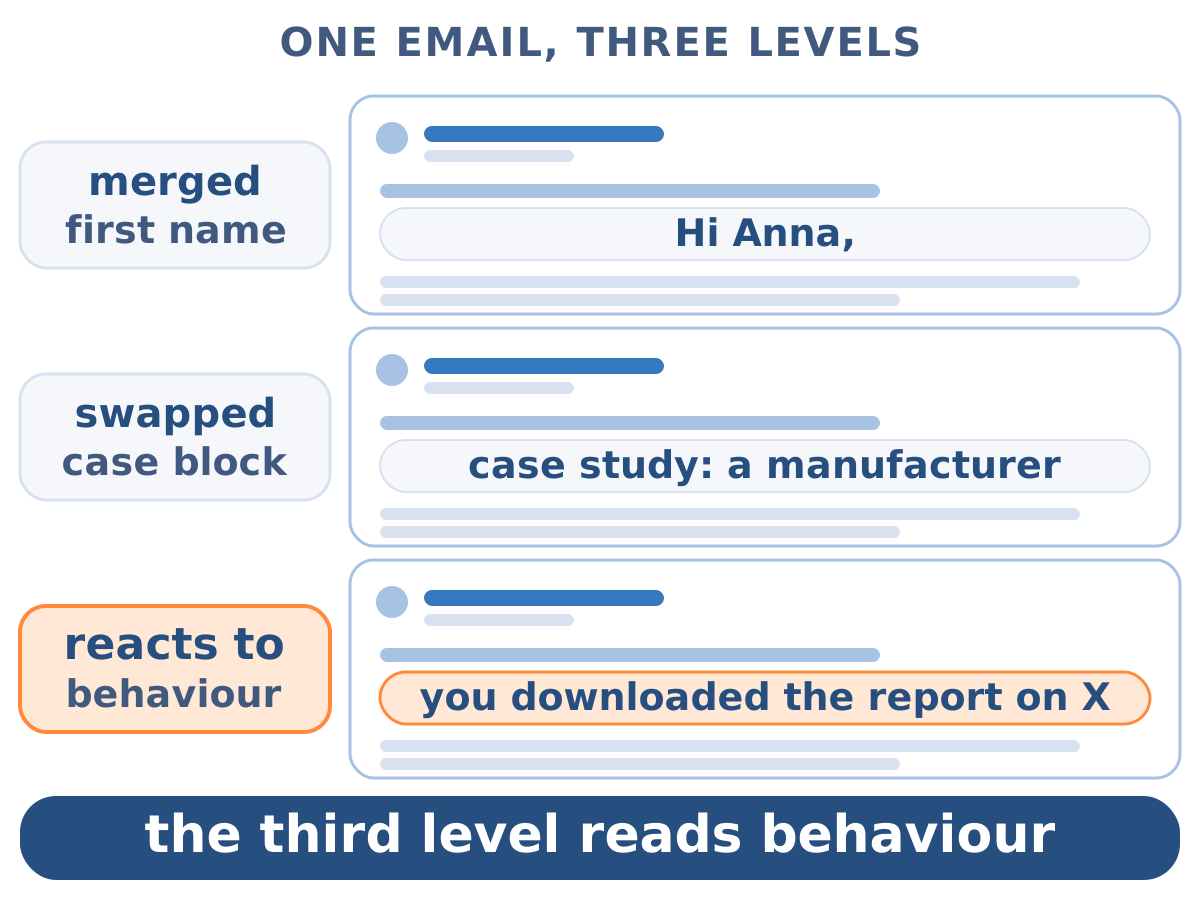
There are three levels, at rising implementation cost
The first is merge fields, which are today's expected minimum and differentiate nothing. The second is conditional content, where the same email changes with the segment and the stage the contact is at. The third is reaction to behaviour, and it works hardest, because it responds to fresh intent rather than to an attribute recorded long ago.
Profiles get built progressively, not with one long form
Progressive profiling asks for the minimum needed to qualify at first contact, and each subsequent download adds one or two previously unknown fields. The form stays short at the entrance, the profile thickens over time, and nobody fills in the same thing twice. It is the simplest personalization that pays immediately, since a fuller profile makes the conditional content at level two more accurate.
The best fuel is data the recipient gave deliberately
Choices ticked in a preference centre — this topic, once a month — outlast inferences drawn from tracking, because they survive changes in consent and privacy settings, and they give the reader a sense of control. Hence the practical boundary: use what the recipient told you, and name the reason for the match openly (“you downloaded the report on X”). A message that draws on data the recipient never knowingly handed over creates distance faster than relevance closes it. Consent collection and documentation are covered in Cold Email Lead Generation.
On-page personalization works the same way
A landing page headline echoing the phrase from the ad, a testimonial from the visitor's own industry, a shortened form for a contact already known. Same three levels, applied before the conversion instead of after it — see the lead conversion guide.
How does AI impact B2B marketing automation?
It adds a layer that does not execute fixed rules but carries out tasks. AI agents qualify enquiries in conversation, draft personalized messages from data about the recipient's company, and book meetings directly in a salesperson's calendar. Three things change as a result:
Rules give way to goals
Instead of “if download then send email 2”, the instruction becomes “establish whether this company has the problem and book a call if so”. That is more capable and far less predictable.
Scoring gets better inputs
Models read behaviour patterns across an account rather than counting page views, which helps most in exactly the B2B situation where several people from one company are researching quietly.
The failure mode moves
A misconfigured rule sends the wrong email; a misconfigured agent has a wrong conversation in your brand's voice.
The lab's own testing treats such agents as a junior sales assistant: they genuinely remove administrative work and first-line contact, and they need supervision. Every workflow gets boundaries — when the agent hands the conversation to a person — plus a review of transcripts. The risk mirrors the benefit exactly: artificial, pushy communication damages trust faster than automation builds it. The visibility side of the same shift, where buyers ask assistants instead of searching, is covered in our AI SEO guide.
How does marketing automation support account-based marketing?
By rolling behaviour up from people to accounts, which is the technical precondition for ABM. Instead of scoring five individuals separately, the platform recognises that five people from one target company have engaged in the same month — and that pattern, not any single visit, is the buying signal worth acting on.
Three capabilities matter for it: account-level scoring, coordinated sequences that reach several roles at one company without repeating themselves, and alerts routed to the salesperson who owns that account. How the target list gets built in the first place is the subject of Account-Based Marketing.
What is the difference between marketing automation and CRM?
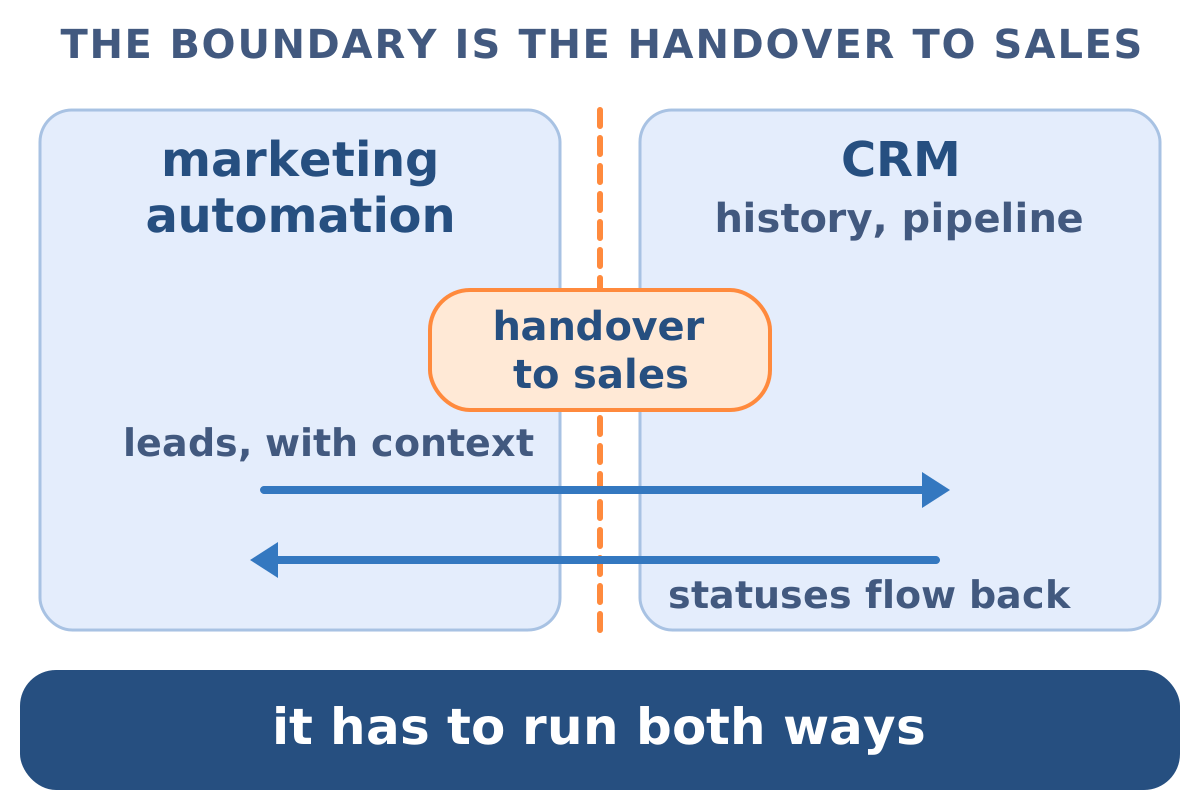
The boundary is the handoff to sales. Marketing automation works earlier: attracting, educating, scoring and maturing contacts until they are ready for a conversation. The CRM takes over afterwards: it holds the history, moves opportunities through the pipeline and supports the salesperson.
In practice the two must be integrated in both directions — automation passes leads over with their full context, and sales statuses flow back into the marketing workflows so that nurture stops when a deal opens. Some platforms combine both functions in one product, in which case the boundary is procedural rather than technological, and it still has to be drawn explicitly.
Which metrics matter in marketing automation?
Three levels, each with its denominator stated:
- Conversion per workflow — does this sequence do what it was built to do, measured against the contacts who entered it?
- Volume and quality of qualified leads passed to sales — is the scoring calibrated, judged by how many of those leads sales accepts and closes?
- Cost per lead including the platform fee — does the automation pay for itself?
Open rate is a supporting signal, not a target, and that applies to personalization too: what counts is the workflow's conversion, not whether the message was opened.
What are the risks and drawbacks?
Four, in the order they bite:
- A platform with no configured workflows — a subscription for nothing, and the most expensive mistake on this page.
- Configuration errors — sending loops, wrong segments, contacts in two workflows at once. Hence testing before launch.
- Loss of human tone when too much gets automated. The safety rule: the closer to a sales conversation, the more human involvement.
- Empty merge fields. A blank or badly-cased name discredits an entire message, so every field needs a default value.
Frequently asked questions about B2B marketing automation
Does marketing automation make sense in a small company?
Yes, from the moment manual handling starts losing follow-ups. A small operation needs a simple tool with a welcome sequence, basic scoring and a form integration — and the return comes from the leads that stopped falling through.
Where do you start when choosing software?
From the list of workflows you want running in the first quarter, then the cheapest tool that runs them and integrates with your CRM and website. Comparing long feature lists leads to overpaying, and unused features generate no leads.
Which level of personalization should you start with?
Conditional content based on the single criterion that most differentiates your audience — in B2B usually industry or buying stage. Merge fields are the expected minimum, and behaviour-triggered messaging needs working tracking and scoring, so it arrives third.
What is the difference between email marketing software and full marketing automation?
Email software sends campaigns to lists. Marketing automation reacts to behaviour, scores it, moves contacts between segments and syncs with the CRM. If your plan is sending a newsletter, the first is enough; if it involves triggers and handoffs, the second is the tool.
Can automation replace a salesperson?
It replaces the administration around selling — reminders, data entry, sequencing, routing — and the first-line contact. The conversation that closes a B2B deal stays human, which is also where the lab's boundary sits.