
A B2B Google Ads campaign buys a place above the organic results at the exact moment somebody types a description of the problem your company solves. For a business-to-business seller this is the fastest channel in B2B lead generation: visibility starts on day one, and the account is charged per click rather than per impression. This page sets out what a campaign is made of, how to launch one in six steps, how the budget is actually derived, and how to read the numbers afterwards.
What is a B2B Google Ads campaign?
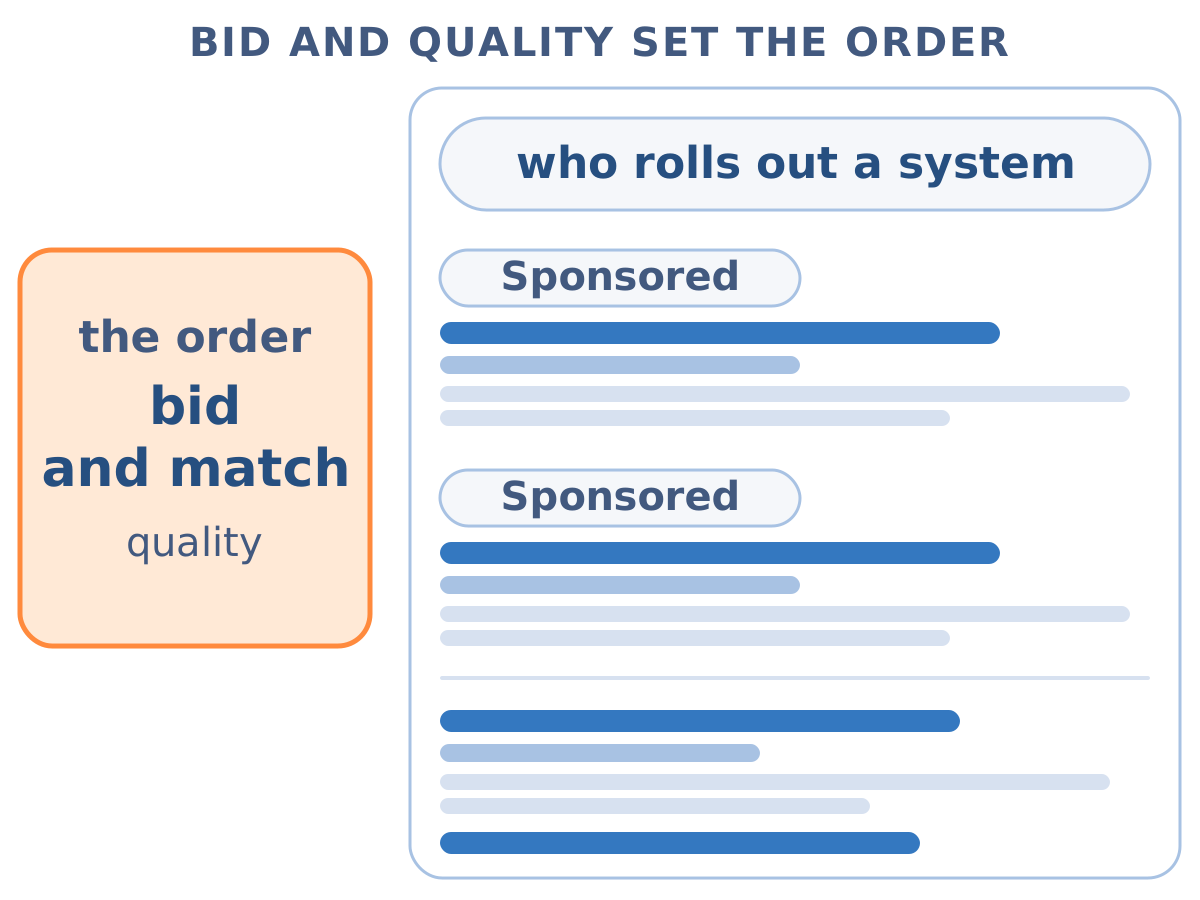
A B2B Google Ads campaign is paid placement in search results, bought at auction and settled per click. Advertisers bid on keywords, the system orders the ads by bid and by quality, and money moves only when somebody clicks — an impression costs nothing, which is what makes the channel measurable down to a single phrase. SEM, search engine marketing, is the wider term and formally covers both paid campaigns and organic work; in everyday market usage “a SEM campaign” means the paid half, and that is the sense used here.
Quality score matters as much as the bid. Relevance between the query and the ad, expected click-through rate and the experience on the landing page all feed it, so a well-matched advertiser can hold a higher position at a lower bid than a competitor bidding more.
What does a B2B Google Ads campaign consist of?
A campaign is four working parts, and each one can sink the other three.
Keywords with an exclusion list
Phrases chosen for purchase intent, paired with negatives — jobs, free, definitions, students — so the budget stays on buyers. In practice a negative list protects spend more reliably than most optimisations.
Ad copy
Headlines and descriptions that answer the query in its own words. Relevance to the phrase is one of the components of quality score, so copy is a cost lever as well as a persuasion lever.
The landing page
A click lands on a page built for one action. Advertising brings the traffic; the landing page turns it into an enquiry, and its construction is set out in the conversion guide.
Budget and auction
Daily caps and cost-per-click bids. Position follows bid multiplied by quality, which is why two accounts spending the same amount can produce very different numbers of enquiries.
How do you launch a B2B Google Ads campaign step by step?
Launching takes six steps, in this order.
- Set the goal and the KPI. For B2B the goal is a commercial enquiry — a completed form, a phone call — and the indicators are cost per enquiry and close rate, with clicks demoted to a diagnostic.
- Select intent keywords and write the negative list. Purchase-intent phrases first, negatives written at the same time rather than later.
- Build the account structure. Campaigns and ad groups mirror the offer: one group holds one coherent set of phrases and the ad written for them.
- Prepare the ads and the landing page together. The ad promises what the landing page delivers; any gap between them costs both conversion rate and quality score.
- Configure conversion tracking before launch. Counting forms and calls is the precondition for judging the campaign at all, and it is the step most often skipped.
- Launch, then optimise on a cycle. The first weeks are the algorithm's learning phase; a fair read needs four to six weeks of data, after which the loop runs: search-terms report, negatives, ad tests, bid corrections. The wider planning frame for this sequence is a lead generation campaign plan.
What is a good daily budget for B2B Google Ads?
A daily budget is an output of the arithmetic, not a number to copy from somebody else's account. The chain runs: order value × close rate = what one enquiry is worth; what one enquiry is worth, divided by the number of clicks it takes to produce one, gives the cost per click the account can afford; that figure multiplied by the clicks you want per day is the daily budget. A campaign scales for as long as the cost of an enquiry sits inside the economics of the sale, and it stops scaling the moment it steps outside them — which is the same test whether the daily figure is small or large.
Two measurements from the laboratory show how badly a borrowed figure travels. On one B2B account the cost per lead from advertising has three legitimate values at once, depending on the denominator — all of a market's leads, leads carrying a campaign parameter, or conversions counted by the ad panel — and the spread between them is 6.2× (denominator: the three definitions applied to one year of one account; the spread is definitional, a property of the three denominators; drySEO lab data). The cost per click on the same account varies 4.2× between its cheapest and its most expensive market (denominator: cost ÷ clicks, summed across rows per market before dividing — an average of averages diverges here by up to 11%; drySEO lab data). Any single number carried in from outside will therefore be right for one definition and one market, and wrong for the rest. The full cost picture per channel is set out in the cost guide.
How do you measure a B2B Google Ads campaign?
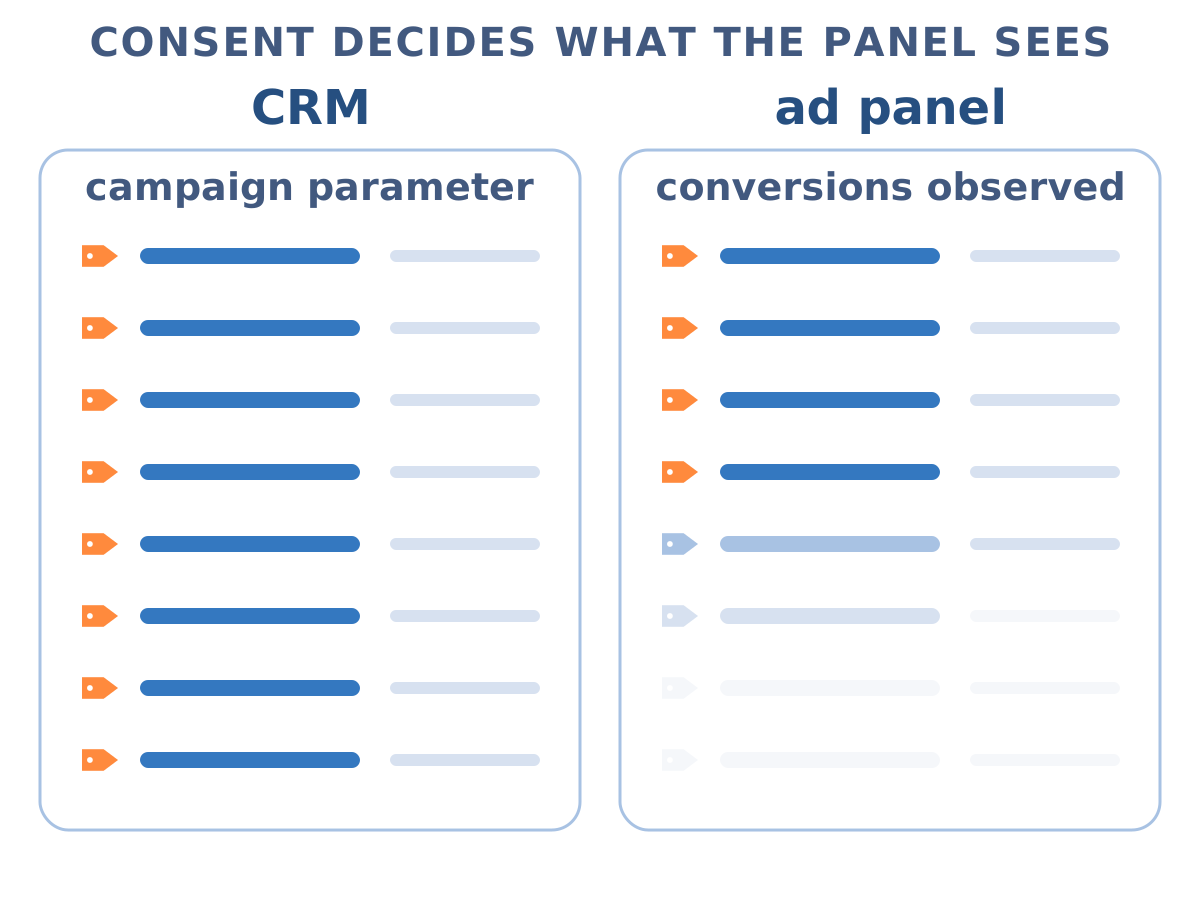
Measurement starts by naming the source of truth, and in B2B that source is the CRM. Consent rules decide which conversions a platform observes directly; the remainder it fills in by modelling. Comparing enquiries tagged with a campaign parameter in the CRM against the conversions reported by the panel gives a difference of 1.4–1.9×, always in the same direction — the panel sees fewer (denominator: campaign-parameter leads in the CRM ÷ panel conversions; a control from a third system agreed within 0.4 percentage points; drySEO lab data). Budget decisions come after reconciling it against sales.
The channel also behaves differently after the form. On one B2B account, enquiries arriving through advertising closed at 15.25% against 11.82% for organic enquiries through the same form — a ratio of 1.29×, statistically significant at p ≈ 0.014 (denominator: orders ÷ enquiries from the same form, channel taken from the campaign parameter, with the direct pool held out separately; drySEO lab data). Paid traffic in this account arrived slightly more ready to buy, and that difference belongs in the budget decision alongside cost per enquiry. Which indicators to keep and how to define them is covered in the metrics guide.
How does B2B Google Ads differ from B2C?
B2B advertising works on small query volumes with high value per enquiry, and it addresses a decision taken by several people over months. Four practical consequences follow.
Volume gives way to intent
A phrase searched fifty times a month by engineers specifying equipment can outperform a phrase searched fifty thousand times, so keyword selection is a commercial exercise.
The conversion is an enquiry, not a sale
The money arrives weeks or months later, which means the account has to be optimised against a signal that precedes revenue and reconciled with revenue afterwards.
Geography is decided by economics
On the account measured in the laboratory the relationship inverts depending on the denominator: the home market costs 3.1× less per lead of that market, while the cost of a lead actually sourced from advertising runs at 0.46× of the home market in the largest export market (denominator: cost ÷ leads of a market, and cost ÷ leads carrying a campaign parameter, per market, one year; drySEO lab data). In the home market advertising supplied 6% of that market's leads; in the largest export market it supplied 43%. The cheap market on one measure is the expensive one on the other.
Automation is fed by the conversion definition
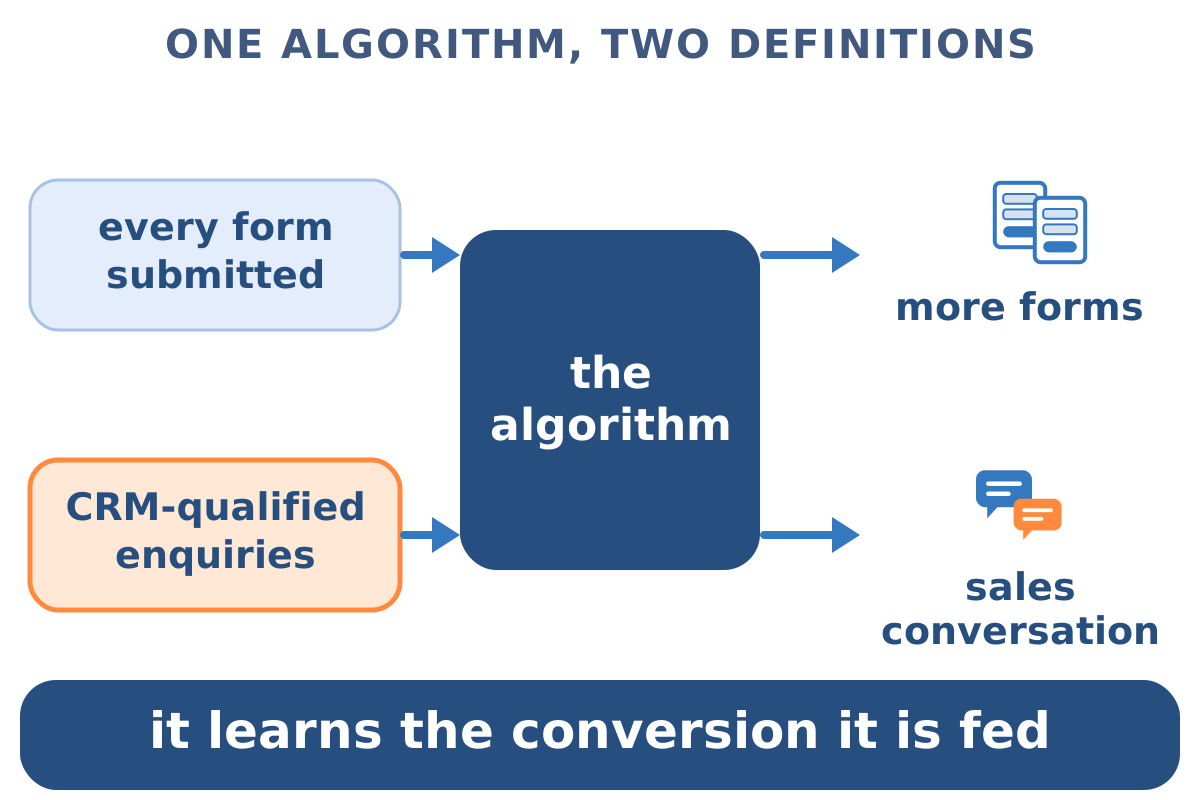
Campaign types that let the algorithm distribute budget across formats and placements perform exactly as well as the conversion data they are trained on. The work moves from adjusting settings to deciding what counts as a conversion, and how that threshold is set is described in the lead qualification guide.
What are the common mistakes in B2B Google Ads?
Four mistakes absorb most of the wasted budget, and each is visible in data the account already holds.
Broad match with no negative list
The ad shows for everything, and the search-terms report fills with queries from students, job seekers and competitors.
Traffic sent to the homepage
A visitor arriving on a general page has to find the offer again, and most of them leave instead.
Launching before conversion tracking works
The campaign runs, the reports look busy, and nobody can say what it produced.
Changing everything during the learning phase
Each nervous adjustment restarts the algorithm's optimisation and pushes the first usable read further out.
How does paid search work alongside organic search?
Paid search buys visibility immediately and loses it the moment the budget stops; organic search builds visibility over months and keeps working after the work pauses. The two feed each other rather than competing: phrases that convert in the paid account are a ready-made topic list for organic content, and organic visitors who left without converting can be reached again through remarketing. A campaign is also the fastest instrument for measuring demand — within weeks it shows which phrases carry buyers, which shortens the guessing on the organic side by months. The organic half of this pairing is developed in our B2B SEO guide.
The scope of work across both halves of search is described in our SEO and SEM services.
FAQ
How quickly does a B2B Google Ads campaign produce leads?
Ads appear the day the campaign goes live and the first enquiries can arrive in the same week. A fair assessment needs four to six weeks, because the algorithm has to pass its learning phase and the conversion data has to reach a size at which decisions stop being coincidence.
Does a small budget make sense in B2B advertising?
Yes, on condition that it is narrowed: few phrases, high intent, precise negatives, one good landing page. A small budget spread across broad phrases produces neither results nor data; the same budget concentrated on a narrow query can pay for itself in the first month.
Is Google Ads the whole of SEM?
In practice, in a market where one search engine dominates, a paid search campaign means Google Ads. Other search advertising exists and can be worth testing for corporate audiences, and video search carries its own campaign types. These are supplements to the search campaign rather than replacements for it.