
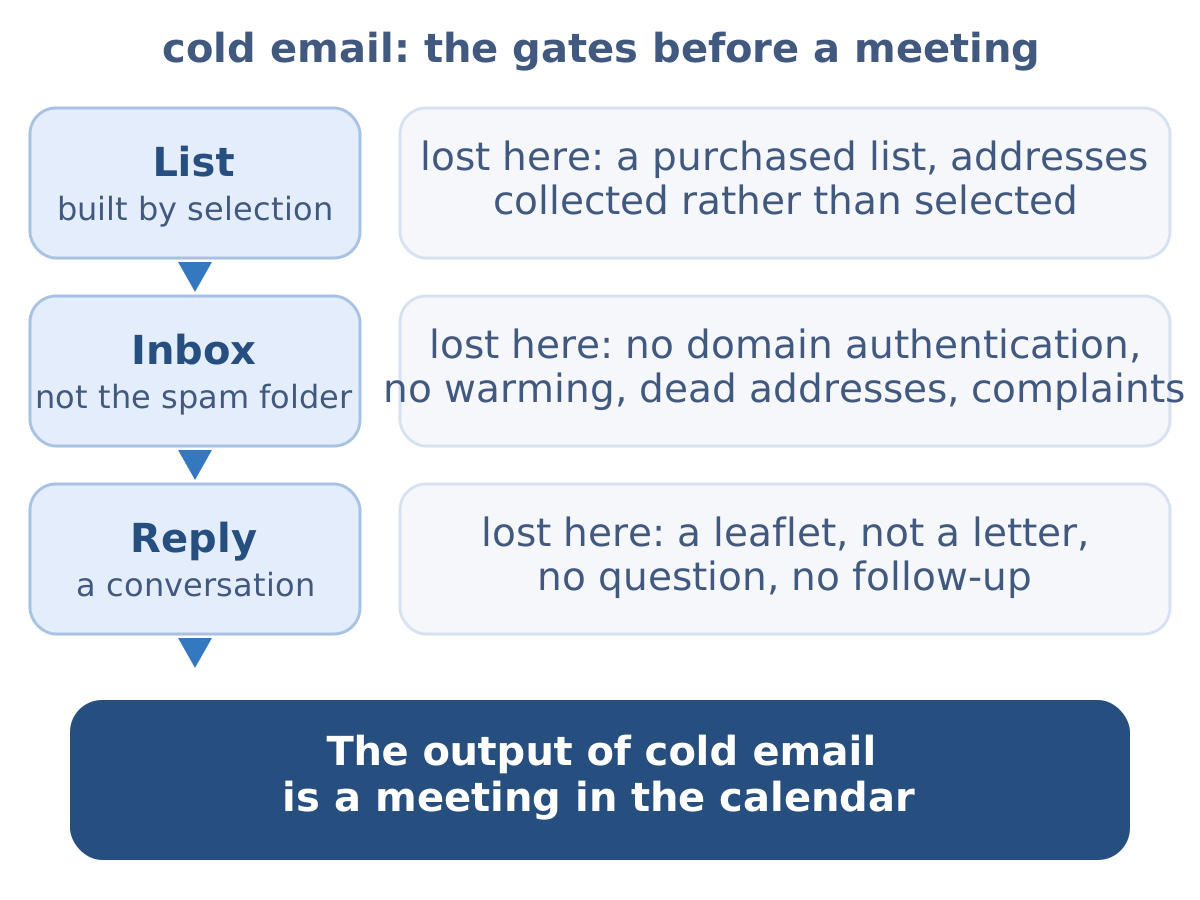
Cold email lead generation is outbound prospecting by email: you choose the companies worth reaching, write to a named person who does not yet know the brand, and aim to start a conversation rather than to sell in the first message. It is one of two modes in which email feeds B2B lead generation — the other being inbound, where a prospect leaves an address in exchange for something valuable and matures on a list. This guide covers both modes: how to build a lead list, how to write a cold email that gets a reply, what the law requires, why deliverability decides everything, and which metrics are worth reading.
What is cold email lead generation, and how does it differ from email marketing?
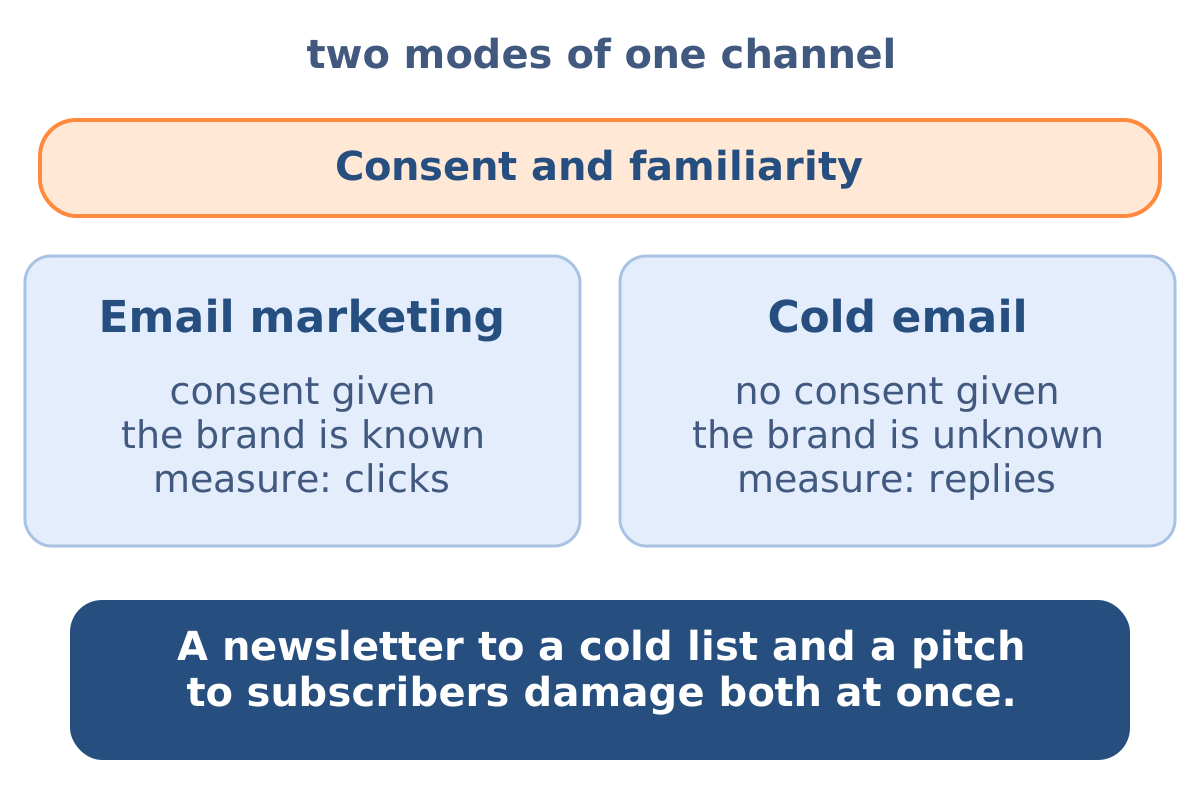
The line runs through consent and familiarity. Email marketing communicates with a list that opted in — the recipient knows the brand, and the goal is nurturing and sale. Cold email writes to people who have not opted in and do not know the brand, which changes everything downstream:
- A different legal basis. Consent or a documented legitimate interest, depending on jurisdiction and recipient — covered in its own section below.
- Different copy. A question about a problem instead of an offer, because the first message has not earned the right to pitch.
- Different metrics. Reply rate rather than click rate, because a good cold email usually carries no link at all.
- Usually a separate sending domain, so that complaints never touch the domain the company's own mail runs on.
Mixing the two modes damages both at once: a newsletter blasted at a cold list generates complaints, and a sales pitch sent to subscribers burns the permission they gave. What the two share is the property that makes email structurally different from social platforms and ads — the list belongs to the company. Reach does not depend on an algorithm or on auction prices, and once built, the list works on every send at a cost close to zero.
What role does email play in a B2B buying cycle?
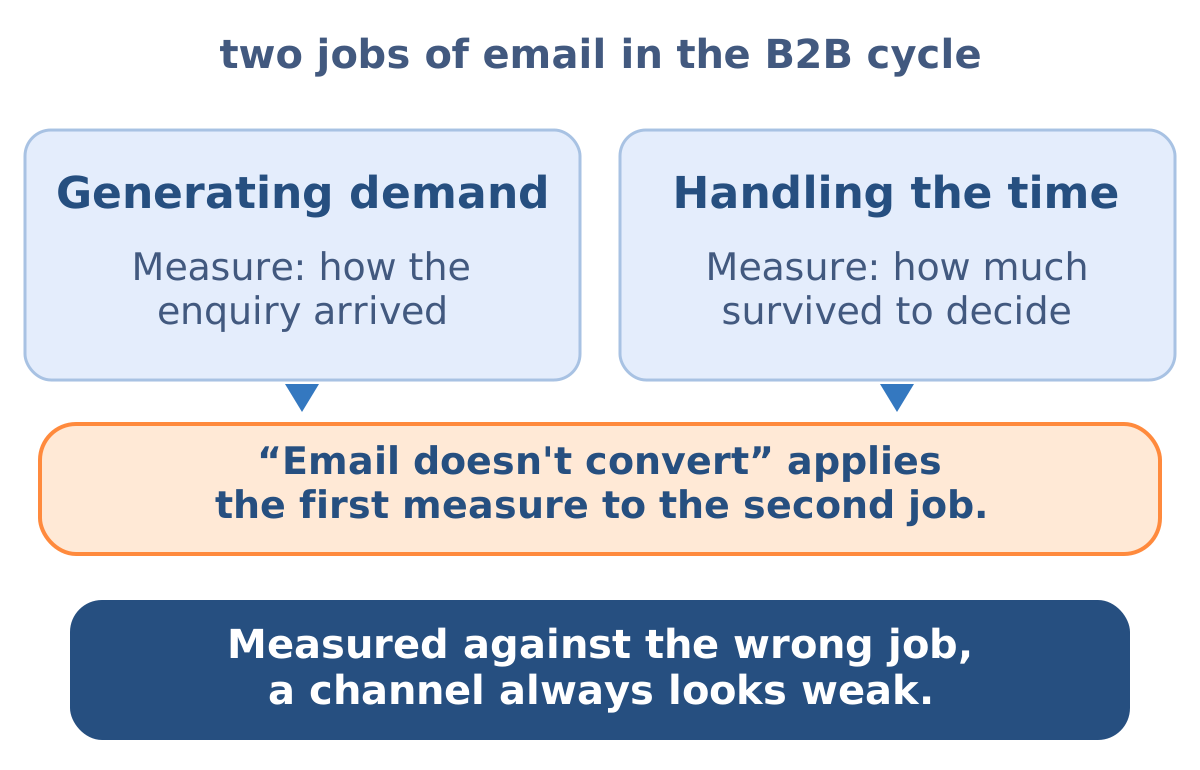
Two different things are worth separating here, because they are measured in different ways: the channel an enquiry arrives through, and what keeps a lead alive until the decision is made. The channel measurement comes first, the practice second, and the length of the decision window last.
Measured. Across a full year of commercial case records, the channel an enquiry arrives through breaks down as form 87.8%, email 9.7%, everything else below 2% — and on the home market the email share rises to 24% (drySEO lab data, measured, exported from the case-handling system; denominator: all commercial cases in one full year, by the channel-of-origin field).
What that number describes is the route an enquiry travelled, not the origin of the interest behind it. Somebody who writes straight to an inbox generally already knows who they are writing to. Read correctly, the email share measures a contact channel, and demand has to be looked for one floor up, in whatever brought that person to the site in the first place.
Measured, second layer
Enquiries arriving outside the form — by email or by telephone — account for 7.8% of all enquiries and close at 25.55% (drySEO lab data, measured, same annual set; denominator: orders against enquiries within that pool). That is the highest close rate anywhere in the set, and the explanation is mundane: the pool is made up of returning customers who already know the supplier and come back for the next job. Which is precisely why it must never be credited to an acquisition channel. It measures return, not capture.
From practice
Between those two moments, the job of email is to warm a lead through the window between the enquiry and the decision (drySEO lab data, directional from practice rather than an export).
Measuring the decision window
The window is long. Measured on the lab's last thousand leads, cumulatively: 7.07% of closings came within 3 days, 41.65% within 45 days and 65.96% within 75 days (drySEO lab data — closings ÷ time since the lead's entry; a share of closings, not of leads). Fewer than half of all closings have happened by day 45, and a third of them arrive after day 75.
That is where the standard complaint about the channel goes wrong. “Email doesn't convert” compares a channel against a job it does not hold — it prices the handling of time as though it were the generation of demand. When a cycle runs for months, the inbox's task is to deliver the contact to the day of decision still warm, not to produce an enquiry in the week of the send. Measured the first way, email always looks weak. Measured the second way, it reports something worth knowing: how much of the pipeline survived long enough to decide.
A matching ruling about outbound. In practice, cold email and cold calling are run to book a meeting — a sales visit, a business breakfast, an invitation to an industry event (drySEO lab data, directional from practice rather than an export). This explains a gap that looks odd in any channel comparison: no cost per lead is quoted for cold outreach, because its output is an entry in a calendar rather than an enquiry in a system. Count it in meetings booked and meetings held; a metric borrowed from an inbound channel will misdescribe it in both directions.
Is cold email still an effective lead generation strategy in 2026?
Yes, and for a structural reason rather than an optimistic one: business decisions still get made at a desk, with an inbox open. What has changed is the cost of doing it badly. Inbox providers filter harder, buyers recognise a mass send within seconds, and the volume of generic outbound has raised the bar for what earns a reply.
That shifts the winning strategy from volume to selection. A few dozen well-chosen companies beat a thousand random ones, because the entire value of a cold email campaign sits in whether the prospect recognises their own problem in the first sentence. The work moves to the front of the process — into defining who is worth writing to, which is the same definition that drives every other channel: B2B Target Audience.
The second thing that changed is patience. Directional, from the drySEO lab's practice rather than from measurement: a new customer typically converts after around the fifth contact, and it can take up to twelve follow-ups (drySEO lab data). Any outbound plan that assumes one message and one reminder is planning to miss most of what it could have closed.
Are B2B cold emails legal under GDPR and CAN-SPAM?
Legal, under conditions that differ by jurisdiction — and the conditions, not the act of sending, are what decide. Three regimes matter to most B2B senders writing in English:
The United States (CAN-SPAM)
Commercial email does not require prior consent, but it does require truthful headers and subject lines, a valid physical postal address, clear identification of the message as a commercial communication, and a working opt-out that is honoured promptly.
The European Union and the UK (GDPR plus the ePrivacy rules)
A business email address that identifies a person is personal data, so processing needs a lawful basis, and marketing to a new contact generally rests on consent or on a legitimate interest that the sender has assessed and documented. The recipient keeps the right to object, and consent has to be as easy to withdraw as it was to give.
Canada (CASL)
The strictest of the three, requiring consent — express or implied through an existing relationship — before a commercial electronic message is sent.
Four practices keep a programme defensible across all of them, which is why they are worth adopting regardless of where the recipient sits. Identify yourself and your company honestly in every message. Make opting out a single click and process it immediately. Keep a record of where each address came from and on what basis it is being contacted. And keep the first message conservative — a question and a request for permission to send detail, not an attachment and a price list.
Two rulings are worth stating plainly. Outsourcing a campaign does not outsource responsibility: the company on whose behalf the marketing goes out remains the data controller, and it answers for the legality of a list a contractor supplied. And a purchased list is a legal exposure rather than a shortcut — it generates complaints, damages sending reputation, and converts marginally.
How do you build a lead list for cold email?
Two different lists, built two different ways, and confusing them is the most common early error.
The outbound lead list is built by selection, not collection. You start from the ideal customer profile, filter by firmographics — industry, size, geography, technologies in use — and then verify manually that each company has the problem you solve and each named person plausibly owns it. Email addresses get verified before the first send, because bounces cost reputation. Intent signals, where you can get them, tell you which of those companies are looking right now, and that is the single strongest input to sequencing.
The inbound email list is built by exchanging value for a contact detail. The chain is reliable: content that attracts → an offer worth an address → a short form. The value is a lead magnet — a calculator, a template, a report — matched to a problem the audience actually has, which is where content strategy and list building meet: Content Marketing for Lead Generation. The form belongs on a landing page built for that single job, and how such pages are judged is covered in the conversion guide.
Two rules protect the inbound list. Confirmed opt-in, where the subscriber clicks a link in a confirmation email, produces a smaller list that is clean and documented. And separate consents for separate purposes: leaving an address to download a report is not permission to receive offers, and treating it as such is the mistake that later invalidates the whole record.
How do you write a cold email that gets replies?
Four parts, in this order, and the whole message fits on a phone screen:
- A subject line that describes, rather than teases. Short, lowercase, specific to the recipient's situation. Anything that reads like a campaign gets the message treated as one.
- A first sentence that proves you know who you are writing to. Not their first name — a detail about their company, role or situation that could not have been merge-tagged. This sentence carries the entire personalization budget and decides whether the rest gets read.
- One pain point, stated as a question. You are asking whether a problem is real for them, not asserting that it is. This is what keeps the message a letter instead of a flyer.
- A small ask. Permission to send detail, or a one-line reply. No attachments, no price list, and at most one link — the more a cold email looks like marketing, the more it is filtered like marketing.
Templates are useful as skeletons and dangerous as scripts: a template that survives contact with a prospect is one where the personalized first sentence is the only part doing persuasive work. The reliable test before sending is to read the message and ask whether a human being with the recipient's job would answer it. If the honest answer is “a busy person would delete this”, the copy gets rewritten rather than the send volume increased.
The follow-up sequence is where most replies actually live. Two or three short follow-ups at intervals of a few days is the working standard for a cold sequence, each adding one new piece of information rather than repeating the ask. Beyond that, an outbound sequence hands over to a longer nurture track, because the lab's practice puts conversion at around the fifth contact and sometimes as far out as the twelfth (drySEO lab data, directional). Sustaining that many touches by hand fails at any real scale, which is why sequences get automated with marketing automation.
How do you improve cold email deliverability?
By treating the inbox as the first conversion step, because the best copy in the world does nothing from a spam folder. Four elements decide it:
Domain authentication
SPF, DKIM and DMARC records prove the sender is entitled to send from that domain. Without them, large mailbox providers reject or flag messages before a human ever sees them.
Sender reputation
A new sending domain needs warming: volume rises gradually, starting with recipients certain to engage. Ramping a cold domain to full volume in a week is the fastest way to destroy it.
List hygiene
Bounces and long-inactive addresses get removed regularly, since sending into dead addresses pulls down the reputation of the whole domain.
Complaint rate
“Mark as spam” carries the heaviest weight of any signal, which makes an obvious unsubscribe link cheaper than a complaint every single time.
For cold email specifically, a separate sending domain is standard practice — a close variant of the main domain, warmed independently, so that the company's own mail keeps working whatever the outbound programme does to its reputation. Keeping daily volume per mailbox modest and spreading sends across several mailboxes is the other half of the same precaution.
What are the 30/30/50 and 80/20 rules in email?
They are rules of thumb that circulate widely in cold email advice, and both are quoted in more than one form — which is precisely the reason to treat them as prompts rather than as numbers.
The 80/20 idea is the Pareto principle applied to a list: a minority of the contacts produce the majority of the replies and revenue. As a claim about your own list it is testable in an afternoon — sort the segments by reply rate and see how concentrated the result really is. As a claim about email in general it has no denominator behind it, so it cannot be verified or refuted.
The 30/30/50 split is quoted as a weighting of where a cold email's success comes from — roughly, who you send to and when, then the subject line and opening, then the body and the ask. The versions differ in what each share is assigned to, and nobody publishes the measurement behind any of them.
The useful reading of both is structural, and it happens to match what a year of funnel measurement says about every other metric: a ratio without a stated denominator is a slogan, not a result. Targeting and timing do carry more weight than copy; a minority of your list does produce most of the outcome. Take those as hypotheses about your own account, run them against your own reply data, and the rules become useful precisely when they stop being quoted as numbers. How denominators are set so that such tests mean something is covered in the metrics guide.
What tools do you need for cold email lead generation?
Four categories, and a programme works with one tool in each rather than with the longest stack:
A prospecting and enrichment source
to assemble the lead list with firmographic filters and verified contact data.
An email verification step
run before the first send, to keep bounce rates low enough to protect the sending domain.
A sending platform built for sequences
with per-mailbox volume limits, automatic follow-up stops on reply, and inbox rotation across several sending addresses.
A CRM that receives the replies
so that a conversation started by outbound becomes a lead record rather than a thread in someone's mailbox.
The one integration that pays for itself is the last: a campaign parameter or source tag that travels from the sending platform into the CRM. Without it, outbound results are judged on platform-side counts alone, and platform-side counts are systematically incomplete.
Which metrics matter in email campaigns?
Different ones per mode, and using the inbound set to judge outbound is how campaigns end up looking successful while producing nothing.
For cold email: reply rate first, then positive reply rate, then meetings booked, then bounce rate and complaint rate as health indicators. Open rate is weak evidence here, since privacy protection in mail clients inflates and distorts it.
For inbound email: clicks, on-site conversions, and unsubscribes plus complaints as the honest measure of whether the content matches the promise made at signup.
Newsletter open rates, directional from the lab's practice rather than from measurement: around 22–25% on average, roughly 29% with personalization alone, and 40–50% when the message is both localised and personalised (drySEO lab data). The mechanism behind that spread matters more than the numbers themselves — relevance to the reader's situation is what moves the metric, and localisation is simply relevance applied to where they are.
Add one more denominator to that list, taken from the role described earlier on this page: the share of enquiries still alive, and still closing, at day 45 and at day 75. That figure says whether a contact programme reaches the part of the cycle where more than half of all closings fall, and a campaign judged inside a single month reports only on the easiest slice of the set.
One more ruling from the lab's own practice: a newsletter is a touchpoint, not a lead source. It keeps a brand present between buying windows and sends readers to a landing page where the conversion actually happens. Judged as a lead source it will always look weak; judged as the thing that keeps a lead warm until the buying window opens, it earns its place. The same logic applies to every channel that hosts a conversation rather than a form, which is why LinkedIn Lead Generation is read the same way.
Read every one of these in trend. A single send is not enough data to conclude anything.
What are the most common cold email mistakes?
Six, in rough order of how much they cost:
- A purchased list, which can destroy in one campaign a sending reputation built over months.
- A cold email written like a flyer — long, with an offer, an attachment and five links.
- No follow-up, which leaves most of the available replies on the table.
- One mass send to everybody instead of segments with sequences written to them.
- Measuring opens only, so the campaign looks alive while producing no conversations.
- One blanket consent collected for everything, which turns out to cover nothing the first time a recipient objects.
Frequently asked questions about cold email lead generation
Does cold email work in every B2B industry?
Wherever decisions are made at a desk, yes. What changes is the entry point: in narrow technical niches a short, hand-verified list works best, while in broader markets building an inbound list through content pays off faster.
Do you need consent to email a business address?
In the EU and the UK, usually yes or a documented legitimate interest, because an address in the form [email protected] identifies a person and is therefore personal data. Generic addresses are sometimes treated more leniently, but sending a commercial message always needs a lawful basis. Under CAN-SPAM in the United States, prior consent is not required, while the disclosure and opt-out duties are.
How many cold emails can you send per day?
Fewer than most senders assume, and the limit belongs to the mailbox rather than to the campaign. A warmed mailbox sustains a modest daily volume; scale comes from more mailboxes and better targeting, and pushing volume through one address is what triggers filtering.
What reply rate is good?
The honest answer starts with what counts as a reply — total replies and positive replies are two different denominators, and they differ by a wide margin. Set the definition first, measure your own baseline, then improve against it rather than against a published figure gathered under rules you cannot see.
Should you use HTML or plain text?
Plain text, for cold email. It matches the premise of a letter from one person to another, carries fewer filtering signals, and removes the temptation to design something that announces itself as a campaign.
Can cold email and inbound work together?
They work best together. Content and search bring in people already looking; cold email reaches the ones who have not started looking yet; and the same list, the same CRM and the same definition of a lead hold the two together.